Ayodele’s Prophecies and The Accountability Deficit
BY OLUFEMI ADUWO
In the spirit of truth, discernment and responsibility that has long shaped Nigeria’s democratic consciousness,from the June 12 struggle to the present democratic dispensation,there is need for sober reflection on the increasing intersection between public prophecy and political commentary.
Over the years, Nigerian public discourse has witnessed instances where spiritual predictions on high profile events did not align with eventual outcomes, yet were delivered with strong certainty. A widely referenced historical example is that of Primate Theophilus Olabayo in the early 1990s, who confidently predicted that President George H. W. Bush would defeat Bill Clinton in the 1992 United States presidential election,an outcome that ultimately did not materialise. That episode remains a cautionary reference point in discussions on prophecy and public accountability.
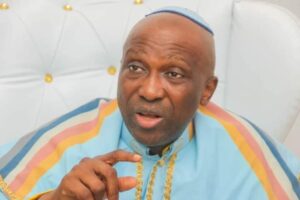
In more recent times, similar concerns have been raised around various public forecasts attributed to Primate Babatunde Elijah Ayodele.It was widely reported that he forecast a victory for President Goodluck Jonathan in the 2015 general elections. However, Jonathan lost the election.He was also reported to have stated that the People’s Democratic Party (PDP) would narrowly win Kaduna State, yet Nasir el-Rufai of the All Progressives Congress (APC) emerged victorious. Similar predictions were attributed to him regarding Yobe, Gombe, Benue, Delta and Akwa Ibom States, many of which did not align with eventual electoral outcomes.
There were also widely circulated claims that PDP would shock APC in Lagos State, which did not materialise. At another point, it was reported that President Buhari would not secure a second term in office. Contrary to that forecast, he was re-elected and completed his tenure.During the President’s medical trip abroad in 2017, further claims were attributed to him suggesting that the presidency was effectively vacant and that the President would not return to office. This too did not reflect subsequent developments, as the President resumed duties.
Taken together, these recurring instances raise legitimate questions about the boundary between spiritual insight, political commentary and empirical accountability. When public declarations consistently mirror prevailing political speculation yet fail to align with outcomes, they risk being interpreted as retrospective analysis rather than genuine foresight.
This is not a dismissal of spiritual gifts or the place of faith in national life. Rather, it is a call for restraint, humility, and responsibility in the exercise of such influence,especially when addressing sensitive matters such as elections, leadership transitions, and international affairs.Scripture itself urges discernment. “By their fruits ye shall know them” (Matthew 7:16). Likewise, Deuteronomy 18:22 reminds believers that when a spoken word does not come to pass, it is not from God. These injunctions emphasise accountability and truth as the measure of spiritual claims.
Biblical history also offers instructive context. Jonah was instructed to proclaim judgement upon Nineveh for its wickedness, yet the city repented and the anticipated destruction did not occur. In frustration, Jonah withdrew, believing his pronouncement had failed and that he had spoken in error. He even became despondent, to the point of wishing for his own death, thinking he had delivered a “false” warning. Yet the scriptural account makes clear that he did not lie; rather, the outcome changed because the people repented and divine mercy prevailed.
In contrast, in contemporary times, concerns are often raised where public figures continue to make bold declarations and when outcomes do not align, there is little reflection or accountability, yet such pronouncements are repeated with confidence and without visible restraint.
Shakespeare, in reflecting on the emptiness of grand but unfulfilled declarations, wrote of life as “a tale told by an idiot, full of sound and fury, signifying nothing”a reminder of how words detached from reality ultimately lose substance.
Nigeria today faces profound economic, security and governance challenges. At such a time, public influence,spiritual or otherwise should strengthen clarity, unity and constructive nation building, rather than deepen uncertainty or fuel speculation
.Ultimately, Nigeria’s destiny is not determined by prophetic declarations, but by strong institutions, civic responsibility and collective moral renewal.
Like Nineveh in the biblical account, nations endure not through predictions, but through repentance, wisdom and reform.
It is therefore a respectful appeal that greater restraint be exercised in the public issuance of prophecies concerning political and global events. True spiritual authority is not measured by the boldness of predictions, but by the consistency of truth, integrity, and the positive transformation it inspires in society.
Nigeria deserves leadership,spiritual and political that is anchored on discernment, accountability and truth.
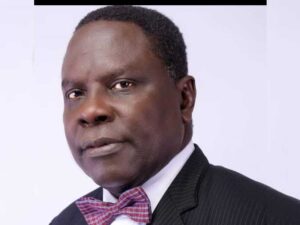
*Olufemi Aduwo is the Permanent Representative of Centre For Convention on Democratic Integrity, (CCDI) to the ECOSOC/ United Nations.