General Musa Not a Magician, Security Success Depends on Equipment, Unity, Says Aduwo

BY AYO ESAN
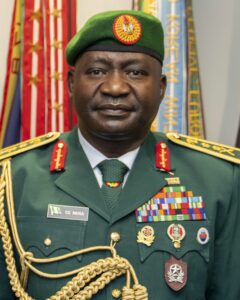
The appointment of General Christopher Gwabin Musa as Nigeria’s Minister of Defence has been hailed as a significant move in the country’s renewed effort to tackle insurgency, organised crime and emerging security threats, but experts say lasting success will depend on more than leadership alone.
Olufemi Aduwo, Permanent Representative of the Centre for Convention on Democratic Integrity (CCDI) to the United Nations, said while the choice of General Musa reflects President Bola Ahmed Tinubu’s preference for experience and discipline, no single individual can resolve Nigeria’s complex security challenges without adequate support.
Aduwo made the remarks on Thursday in Geneva during a session on asymmetric warfare and its development implications in sub-Saharan Africa.
He stressed that effective security outcomes require sufficient funding, modern military equipment, motivated personnel and an intelligence architecture that goes beyond conventional operations.
According to him, citizen cooperation remains critical to counter-terrorism efforts, noting that credible and timely information from civilians often acts as a force multiplier. He cited examples from the United States, where public vigilance helped foil the 2009 attempted bombing of a Detroit-bound aircraft and the 2010 Times Square car bomb plot.
The CCDI representative described President Tinubu’s declaration of a national security emergency as a prudent and necessary step, but warned that it must be matched with clear operational planning, adequate troop deployment and the provision of modern hardware. He argued that all military and security operations during the emergency period should be placed under the direct command and coordination of the Minister of Defence to ensure unity of command and operational efficiency.
Aduwo also called for the realignment of vigilante operations currently supported by the Office of the National Security Adviser under the Ministry of Defence, cautioning that parallel command structures could weaken national security efforts. He maintained that the role of the National Security Adviser should remain advisory and strategic, without direct involvement in recruitment, arming or operational control of armed groups.
While acknowledging that the proposed 2026 defence budget signals progress, Aduwo said it remains inadequate when measured against the scale and sophistication of Nigeria’s security threats. He urged state and local governments to make financial contributions during the emergency period, insisting that defence spending should be treated as a first-line charge across all tiers of government, since the Armed Forces are institutions of the Federation.
He further warned against independent negotiations between subnational governments and terrorist groups, describing such engagements as dangerous and counterproductive. According to him, uncoordinated talks risk appeasement, diversion of public funds and the compromise of ongoing military operations, insisting that all negotiations must be centrally coordinated through Defence Headquarters.
Rejecting claims that kinetic operations are ineffective, Aduwo said decisive military action has historically weakened terrorist organisations and created conditions for successful non-kinetic interventions. He pointed to the defeat of the Liberation Tigers of Tamil Eelam in Sri Lanka between 2006 and 2009, as well as the dismantling of ISIS strongholds in Mosul and Raqqa between 2016 and 2019, as evidence of the impact of sustained military campaigns.
He noted that non-kinetic measures such as intelligence gathering, financial disruption, border control, strategic communication, community resilience, good governance and deradicalisation are vital for long-term stability, but must complement rather than replace firm military action.Aduwo said that national security is a shared responsibility, expressing confidence that with strategic coordination, adequate resourcing and active civilian cooperation, Nigeria can strengthen its defence posture, protect its citizens and restore lasting peace and stability.